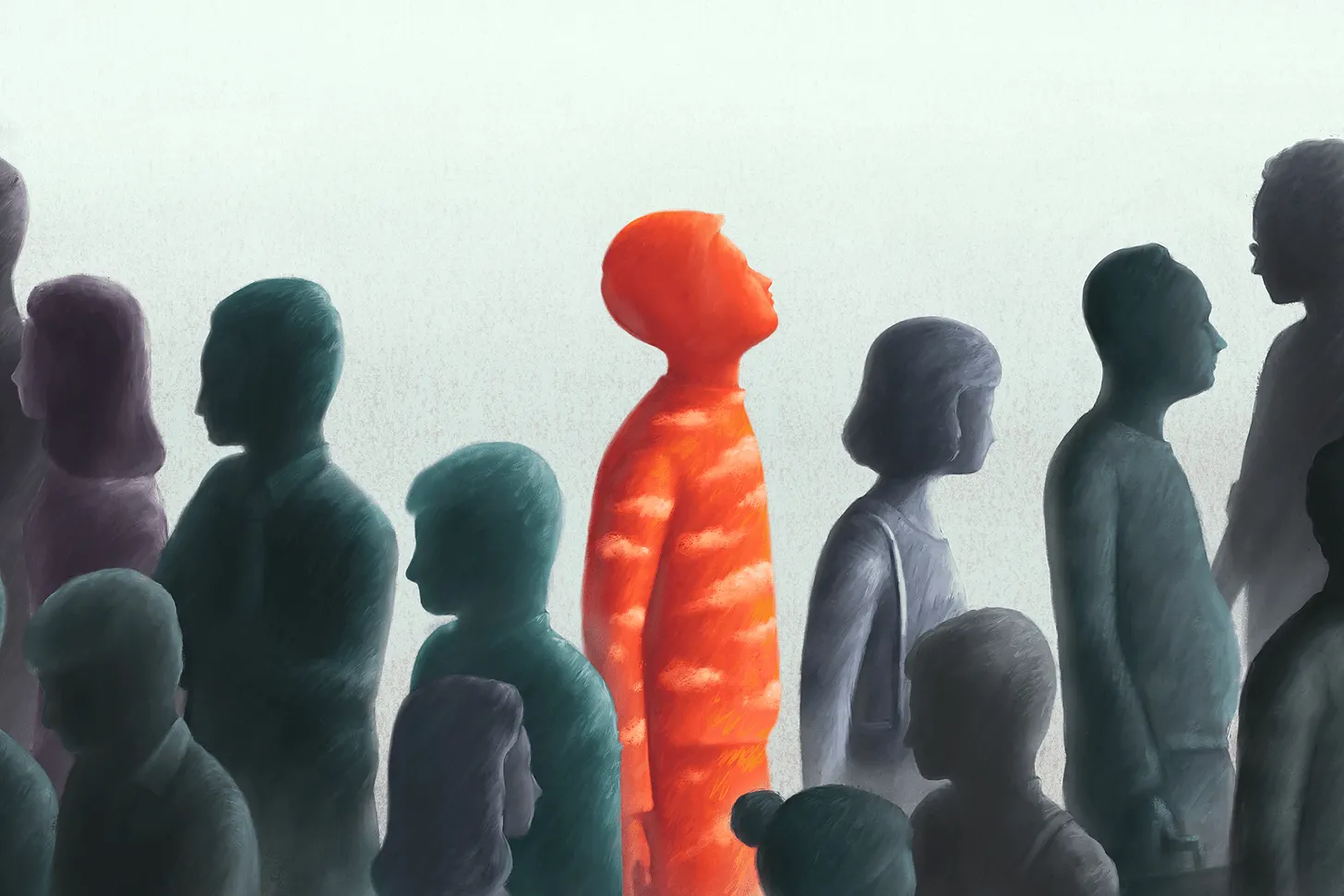
Most of us like to believe that cruelty belongs to someone else. We imagine that history’s worst moments were created by unusually evil people with no conscience or compassion. It is comforting to think that there is a clear line separating ordinary people from those capable of causing harm.
Psychology tells a more uncomfortable story.
Research into human behavior suggests that under certain social conditions, ordinary individuals can behave in ways that completely contradict their personal values. A person who is kind in everyday life may become hostile within an angry crowd. Someone who would never insult a stranger face-to-face may participate in an online pile-on with thousands of others. Another person may remain silent while witnessing injustice simply because everyone else appears comfortable doing the same.
This does not happen because people suddenly become evil. It happens because our decisions are deeply influenced by the groups we belong to, the emotions surrounding us, and the social pressure we often fail to notice.
Understanding crowd psychology is not about judging other people. It is about recognizing how every human mind—including our own—can be influenced by powerful social forces. Once we understand these forces, we become far better equipped to resist them.
Table of Contents
- 1 The Hidden Psychology of Crowds
- 2 1. Deindividuation: When Personal Identity Begins to Fade
- 3 2. Conformity: Why We Follow the Crowd Even When We Know Better
- 4 3. Emotional Contagion: How Feelings Spread Through Groups
- 5 4. When Moral Certainty Becomes Dangerous
- 6 5. The Influence of Authority and Social Leaders
- 7 6. The Digital Crowd: When Thousands Think as One
- 8 7. The Bystander Effect: Why Good People Sometimes Do Nothing
- 9 8. Group Identity Can Cloud Independent Thinking
- 10 9. Small Actions Can Lead to Great Harm
- 11 How to Resist Harmful Crowd Psychology
- 12 Final Thoughts
- 13 Frequently Asked Questions
The Hidden Psychology of Crowds
A crowd is much more than a collection of individuals standing in the same place. Whether gathered in a stadium, a protest, an office meeting, or on social media, groups create psychological environments that shape how people think, feel, and behave.
Within a crowd, emotions spread faster, decisions become more impulsive, and personal responsibility often begins to fade. Individuals start paying less attention to their own judgment and more attention to what everyone else seems to believe.
Psychologists have spent more than a century studying this phenomenon. While crowds can inspire extraordinary courage, generosity, and cooperation, they can also encourage aggression, prejudice, and harmful behavior that few members would display alone.
The difference often lies in the psychological climate created by the group.
1. Deindividuation: When Personal Identity Begins to Fade
One of the most important concepts in crowd psychology is deindividuation. This occurs when people become so immersed in a group that their individual identity becomes less noticeable, both to themselves and to others.
When this happens, self-awareness decreases while impulsive behavior becomes more likely.
Imagine attending a sporting event where thousands of fans are shouting insults. Someone who would normally remain polite may suddenly find themselves joining the chants without much thought. Online, the same process occurs behind anonymous usernames, where distance and invisibility reduce feelings of accountability.
This does not mean anonymity automatically causes cruelty. Rather, anonymity lowers the psychological barriers that normally encourage empathy, reflection, and self-control.
When people feel unseen, they sometimes behave in ways they later struggle to recognize as their own.
2. Conformity: Why We Follow the Crowd Even When We Know Better
Human beings are deeply social creatures. Throughout history, belonging to a group increased the chances of survival, making conformity a natural part of human psychology.
Classic experiments by psychologist Solomon Asch demonstrated that people often agree with an obviously incorrect answer simply because everyone else in the room appears to believe it.
The pressure is rarely dramatic. It often feels subtle.
We hesitate before disagreeing.
We question our own judgment.
We assume the group must know something we don’t.
Over time, repeated conformity can gradually silence independent thinking. The result is not necessarily agreement but compliance. People begin acting against their own beliefs simply because standing alone feels uncomfortable.
This is one of the reasons misinformation, rumors, and public outrage can spread so quickly. Once enough people appear convinced, others become increasingly reluctant to question the prevailing narrative.
3. Emotional Contagion: How Feelings Spread Through Groups
Have you ever entered a room where everyone seemed anxious and found yourself becoming anxious without knowing why?
Psychologists call this emotional contagion.
Human emotions are remarkably contagious. Fear, anger, excitement, hope, and joy can spread rapidly through groups, often without anyone consciously realizing it.
Social media has dramatically amplified this process. A single emotional post can be shared thousands of times within minutes. As more people react emotionally, others begin responding to the emotional tone rather than carefully examining the facts.
When emotions spread faster than evidence, thoughtful judgment often becomes the first casualty.
This is why emotionally charged headlines frequently travel much farther than careful analysis. Our brains evolved to respond quickly to perceived threats, making emotionally intense information particularly difficult to ignore.
4. When Moral Certainty Becomes Dangerous
Perhaps the most surprising aspect of crowd psychology is that harmful behavior is rarely motivated by a desire to do harm.
More often, people believe they are defending something good.
History repeatedly shows that individuals often justify harsh actions when they believe they are protecting justice, morality, patriotism, or the well-being of their community.
This process, known as moral justification, allows people to reinterpret harmful actions as necessary or even virtuous.
Instead of seeing another person as a complex human being, they begin seeing only a symbol, an enemy, or a problem that must be eliminated.
Once empathy disappears, compassion becomes much harder to sustain.
That is why one of the healthiest psychological habits we can develop is the ability to separate disagreement from dehumanization. We can strongly oppose someone’s ideas while still recognizing their humanity.
5. The Influence of Authority and Social Leaders
Groups rarely become destructive on their own.
They are often shaped by influential voices.
Whether it is a political leader, a celebrity, a workplace manager, or a popular social media personality, authority figures play an enormous role in setting the emotional tone of a group.
Psychological research has repeatedly shown that people are more likely to accept behaviors they would normally reject if those behaviors appear to have the approval of respected leaders.
Sometimes authority influences people through direct instructions.
Other times, it works through something much quieter.
Silence.
When respected individuals fail to challenge harmful behavior, many people interpret that silence as permission to continue.
This is why ethical leadership matters so deeply. Leaders influence not only what groups do but also what they believe is acceptable.
6. The Digital Crowd: When Thousands Think as One
The internet has transformed the way crowds form. In the past, large groups gathered in streets, stadiums, or public squares. Today, millions of people can unite around a single post within minutes. A rumor spreads across platforms, emotions escalate, and thousands of strangers begin reacting to the same event without ever meeting each other.
Social media has made crowd psychology faster and more powerful than ever before. Algorithms often reward content that generates strong emotional reactions, especially anger, outrage, or fear. The more emotional a post becomes, the more visibility it receives, creating a cycle that encourages increasingly extreme responses.
This doesn’t mean social media is inherently harmful. It has helped organize charitable movements, disaster relief, and campaigns for justice. However, the same psychological forces that unite people for positive causes can also fuel harassment, misinformation, and public shaming when emotions outrun evidence.
Before sharing a controversial story, ask yourself a simple question: Am I reacting to verified facts, or am I reacting to everyone else’s emotions? That brief pause can prevent you from becoming part of a harmful digital crowd.
7. The Bystander Effect: Why Good People Sometimes Do Nothing
Most people imagine they would step forward if they witnessed someone being treated unfairly. Yet psychology shows that the presence of other people often reduces the likelihood that anyone will act.
This phenomenon is known as the bystander effect.
When responsibility is shared among many individuals, each person unconsciously assumes someone else will intervene. The larger the group becomes, the easier it is for everyone to remain passive.
The same pattern appears online. Thousands of people may witness bullying, false accusations, or public humiliation, yet few choose to speak up. Many silently scroll past, believing someone else will correct the misinformation or defend the person being attacked.
Unfortunately, silence often strengthens harmful behavior. When nobody objects, people may assume the group’s actions are acceptable.
One calm voice asking for evidence, encouraging empathy, or reminding others to slow down can sometimes change the direction of an entire conversation.
Courage is often quieter than outrage, but it is far more powerful.
8. Group Identity Can Cloud Independent Thinking
Humans naturally seek belonging. Families, workplaces, political movements, sports teams, cultures, religions, and online communities all provide identity and connection.
There is nothing wrong with belonging to a group. Problems arise when our identity becomes so closely tied to the group that questioning it feels like questioning ourselves.
Psychologists refer to this as social identity. Once we strongly identify with a group, we become more likely to defend it automatically, excuse its mistakes, and dismiss criticism without careful consideration.
At the same time, people outside the group may begin to seem less trustworthy or less worthy of empathy.
Healthy communities encourage discussion, disagreement, and critical thinking.
Unhealthy communities reward unquestioning loyalty.
Real strength is not shown by defending your group at every opportunity. It is shown by having the courage to challenge your own side when it falls short of its values.
9. Small Actions Can Lead to Great Harm
History reminds us that devastating events rarely begin with extraordinary acts of cruelty.
More often, they begin with ordinary decisions.
A hurtful joke that nobody challenges.
A false rumor repeated without verification.
A cruel comment shared for entertainment.
A person ignored because everyone assumes someone else will help.
Each decision may appear insignificant on its own, but together they create powerful social momentum. Harm grows gradually as people become accustomed to behavior they would once have considered unacceptable.
Psychologists sometimes describe this process as the normalization of deviance. Small ethical compromises slowly become ordinary until few people remember where the line originally stood.
The greatest danger is not one dramatic choice.
It is hundreds of ordinary choices made without reflection.
How to Resist Harmful Crowd Psychology
Understanding crowd psychology is valuable only if we learn how to respond differently.
Fortunately, research suggests there are practical habits that strengthen independent thinking even in emotionally charged situations.
Slow yourself down before reacting. Strong emotional reactions often create a false sense of urgency. Taking time to verify information allows reason to catch up with emotion.
Question certainty. When everyone seems absolutely convinced, ask what evidence supports the conclusion. Healthy skepticism protects both ourselves and others.
Humanize people, even when you disagree with them. It is much harder to treat someone cruelly when you remember they are a person with fears, hopes, and relationships just like your own.
Welcome respectful disagreement. Diverse perspectives reduce the risk of groupthink and encourage better decision-making.
Accept mistakes with humility. If new evidence proves you wrong, changing your mind is not a weakness. It is one of the strongest signs of intellectual maturity.
Finally, surround yourself with people who value truth more than winning arguments. Communities built on curiosity, empathy, and accountability are far less likely to become harmful crowds.
Final Thoughts
Crowds themselves are not dangerous.
They have inspired scientific breakthroughs, social progress, humanitarian movements, and extraordinary acts of courage. Human beings achieve many of their greatest accomplishments by working together.
The danger appears when emotion replaces reflection, when conformity replaces conscience, and when belonging becomes more important than truth.
Every one of us is influenced by the people around us. That is part of being human. The goal is not to isolate ourselves from society but to remain aware of the psychological forces shaping our decisions.
The next time you find yourself joining a heated discussion, sharing a viral post, or agreeing with the majority simply because everyone else seems certain, pause for a moment.
Ask yourself whether you are thinking independently or simply echoing the crowd.
History rarely remembers the people who followed without question.
It remembers those who had the courage to think, verify, empathize, and act with integrity when it mattered most.
The strongest mind is not the loudest voice in the crowd.
It is the one that remains thoughtful even when everyone else stops thinking.
Frequently Asked Questions
What is crowd psychology?
Crowd psychology is the study of how individuals think, feel, and behave differently when they become part of a group. Social influence, shared emotions, and conformity can significantly affect decision-making.
What is deindividuation in psychology?
Deindividuation is a psychological state in which people lose some sense of personal identity and responsibility while participating in a group, making impulsive behavior more likely.
Why do people follow the crowd?
People often conform because they want acceptance, assume the majority is correct, or fear social rejection. Conformity is a natural human tendency, but it can sometimes lead to poor decisions.
Social media spreads emotions and information rapidly, making it easier for large groups to form around shared opinions. Algorithms that prioritize emotional content can amplify outrage, misinformation, and online harassment.
How can I avoid harmful groupthink?
Practice critical thinking, verify information before sharing it, welcome different perspectives, question emotionally charged narratives, and remain willing to change your opinion when new evidence emerges.