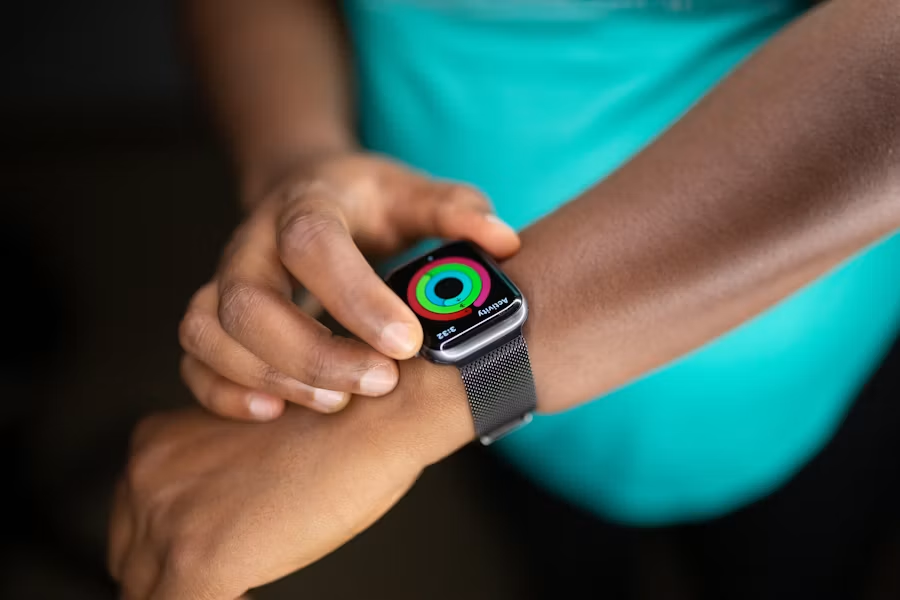
Your wrist or finger can now tell you far more than the time. Modern smartwatches and smart rings can track heart rate, sleep patterns, physical activity, recovery, and other health-related measurements throughout the day. What once required specialized equipment can now be monitored through small devices people wear during work, exercise, sleep, and everyday activities.
This growth in wearable health technology is changing the way people think about personal wellness. Instead of checking your health only when something feels wrong, continuous monitoring can help you recognize patterns in your sleep, activity, stress, and recovery.
But there is an important distinction: wearable devices can provide useful insights, but they are not a replacement for professional medical care. Their greatest value comes from helping you understand long-term patterns rather than obsessing over every individual number.
Table of Contents
- 1 How Wearable Health Technology Works
- 2 Smartwatches Are Becoming Personal Health Dashboards
- 3 Smart Rings Make Health Tracking More Convenient
- 4 Sleep Tracking Is Becoming More Popular
- 5 Heart Health and Continuous Monitoring
- 6 Fitness Tracking Is Becoming More Personalized
- 7 The Rise of Recovery Tracking
- 8 Can Wearables Help With Stress Awareness?
- 9 The Problem With Too Much Health Data
- 10 Privacy Matters Too
- 11 Are Smartwatches and Smart Rings Medical Devices?
- 12 How to Use Wearable Health Technology Wisely
- 13 The Future of Continuous Health Monitoring
- 14 Final Thoughts
- 15 Frequently Asked Questions
- 15.1 What is wearable health technology?
- 15.2 What can smartwatches monitor?
- 15.3 Can smart rings track sleep?
- 15.4 Are wearable health devices accurate?
- 15.5 Can wearable technology detect health problems?
- 15.6 Is continuous health monitoring worth it?
- 15.7 What should I consider before buying a wearable?
How Wearable Health Technology Works
Wearable health devices use tiny sensors to collect information from the body. Optical sensors can estimate heart rate by detecting changes in blood flow beneath the skin, while motion sensors track movement and physical activity. Depending on the device, additional sensors can collect information related to temperature, blood oxygen, or heart rhythm.
The device then processes this information through software and presents it as measurements, trends, scores, or alerts. This means the real power of wearable technology isn’t necessarily one measurement. It is the ability to collect information consistently over time.
Smartwatches Are Becoming Personal Health Dashboards
Modern smartwatches have evolved far beyond step counting. Depending on the model, they can monitor heart rate, workouts, sleep, activity, heart rhythm, and other wellness measurements.
This continuous access to information can encourage people to become more aware of their habits. Someone might notice that their resting heart rate changes after poor sleep or that their activity levels drop during particularly stressful weeks.
However, an unusual reading doesn’t automatically mean something is wrong. Measurements can be affected by movement, device placement, individual differences, and other factors. A wearable should provide information, not create unnecessary fear.
Smart Rings Make Health Tracking More Convenient
Smart rings offer another approach to continuous health monitoring. Their small size makes them particularly appealing to people who don’t want to wear a smartwatch throughout the night.
Many smart rings focus on sleep, resting heart rate, recovery, activity, temperature trends, and other wellness measurements. Because they are lightweight and unobtrusive, they can be easier for some people to wear consistently.
That consistency is important. A device that you actually wear every day can reveal patterns that occasional measurements cannot.
Sleep Tracking Is Becoming More Popular
Sleep tracking has become one of the most common uses of wearable health technology. Modern devices can estimate sleep duration and provide information about nighttime activity and different stages of sleep.
The most useful part isn’t necessarily receiving a perfect sleep score. Instead, the data can help you identify patterns.
You might discover that your sleep tends to be worse when you stay up late, exercise too close to bedtime, maintain an inconsistent schedule, or spend too much time on your phone before sleeping.
The goal should be understanding your habits rather than becoming dependent on a number displayed on a screen.
Heart Health and Continuous Monitoring
Heart-related measurements are another major reason people use wearable devices. Smartwatches can monitor heart rate during exercise and rest, while some devices offer features designed to identify possible irregular heart rhythms.
Heart-rate variability, commonly known as HRV, has also become popular among fitness and wellness enthusiasts. HRV refers to changes in the time between individual heartbeats and can be influenced by sleep, stress, exercise, and recovery.
However, HRV varies significantly between individuals. Comparing your number with someone else’s is usually less useful than watching your own patterns over time.
Fitness Tracking Is Becoming More Personalized
Wearables have made it easier to understand how your body responds to exercise. Depending on the device, users can track distance, pace, heart rate, activity levels, workout duration, and other metrics.
For athletes, this information can help guide training. For everyday users, it can provide motivation to walk more, exercise consistently, or simply become more active.
The healthiest approach is to use the technology as a guide rather than allowing it to turn every workout into a competition.
The Rise of Recovery Tracking
One of the biggest changes in wearable technology is the shift from measuring activity to measuring recovery.
Older fitness trackers primarily asked, “How much did you do?” Modern systems increasingly ask, “How well is your body recovering?”
Sleep, resting heart rate, HRV, activity, and other measurements can be combined into recovery or readiness scores. These scores may help users recognize when they need more rest instead of automatically pushing harder.
This represents an important change in fitness culture. More exercise isn’t always better. Recovery is part of performance too.
Can Wearables Help With Stress Awareness?
Some wearable devices estimate stress using combinations of physiological measurements and activity data. Although these measurements cannot fully understand someone’s emotional state, they may help reveal patterns.
For example, you might notice that certain work situations consistently coincide with changes in your heart rate or that your body responds differently after a poor night’s sleep.
That awareness can be useful because recognizing a pattern is often the first step toward changing a habit.
Still, a wearable’s stress score should not be treated as a definitive measurement of mental health.
The Problem With Too Much Health Data
More information isn’t always better.
Continuous monitoring can sometimes create health anxiety, especially when users repeatedly check their heart rate, sleep score, recovery level, calories, or other measurements.
A slightly different number can suddenly feel like a problem, even when there is no meaningful change in health.
This is why context matters. A single unusual measurement is usually less informative than a consistent pattern over time.
Your wearable should help you understand your body, not make you constantly worry about it.
Privacy Matters Too
Wearable health technology also creates important privacy questions. These devices can collect detailed information about sleep, movement, exercise, routines, and physiological patterns.
Before buying a wearable, users should understand what information the device collects, how that data is stored, what companies can access, and whether information may be shared with third parties.
The future of wearable health technology isn’t just about what devices can measure. It’s also about who controls the data.
Are Smartwatches and Smart Rings Medical Devices?
Not necessarily.
Many consumer wearables are designed primarily for fitness and wellness. Some specific features may have medical or regulatory authorization for particular purposes, but that doesn’t mean the entire device can replace clinical equipment or professional medical evaluation.
Measurements can also be affected by movement, device fit, sensor placement, and individual differences.
If a wearable produces a concerning result, it is better to consider it alongside symptoms and seek professional medical advice when appropriate rather than immediately assuming the worst.
How to Use Wearable Health Technology Wisely
The healthiest approach is to use wearable data to understand yourself rather than judge yourself.
Choose the measurements that actually matter to your goals. If you’re trying to improve sleep, focus on sleep duration and consistent routines. If you’re training for an athletic event, focus on the metrics relevant to your training and recovery.
Most importantly, look at trends instead of reacting emotionally to individual readings.
Your wearable should support your decisions, not make every decision for you.
The Future of Continuous Health Monitoring
Wearable health technology is likely to become increasingly personalized. Future devices may become better at combining multiple measurements and identifying meaningful changes from a person’s normal baseline.
Artificial intelligence could also make large amounts of health data easier to understand by identifying patterns that would be difficult to notice manually.
The challenge will be balancing convenience with accuracy, privacy, and responsible interpretation.
The goal shouldn’t be to measure everything. It should be to measure the right things well enough to make better decisions.
Final Thoughts
Smartwatches and smart rings are changing personal health monitoring by making health-related information available throughout everyday life. They can encourage movement, reveal sleep patterns, support training, and help people become more aware of their routines.
But the best wearable isn’t necessarily the one with the most features. It’s the one that helps you understand your habits without making you obsessed with numbers.
Health isn’t a score on a screen. It’s the larger picture created by sleep, movement, nutrition, stress, relationships, environment, and countless other factors.
Wearable technology can help us see part of that picture. The real value comes from knowing how to use the information wisely.
Frequently Asked Questions
What is wearable health technology?
Wearable health technology includes devices such as smartwatches, smart rings, and fitness trackers that collect information about physical activity and selected physiological signals.
What can smartwatches monitor?
Depending on the model, smartwatches can monitor heart rate, activity, sleep-related information, heart rhythm, and other health and fitness measurements.
Can smart rings track sleep?
Yes. Many smart rings are specifically designed to monitor sleep-related measurements and help users identify patterns in their nighttime routines.
Are wearable health devices accurate?
Accuracy varies depending on the device, sensor, measurement, fit, and circumstances. Wearables can provide useful trends but shouldn’t automatically be treated as medical diagnostic equipment.
Can wearable technology detect health problems?
Some devices can identify measurements that may deserve further attention, but they cannot replace professional medical diagnosis or treatment.
Is continuous health monitoring worth it?
For many people, continuous monitoring can be useful for understanding long-term patterns and encouraging healthier habits. However, constantly checking health data can also create unnecessary anxiety.
What should I consider before buying a wearable?
Consider comfort, battery life, sensors, health features, compatibility, subscription costs, privacy policies, and whether the device fits your daily routine.