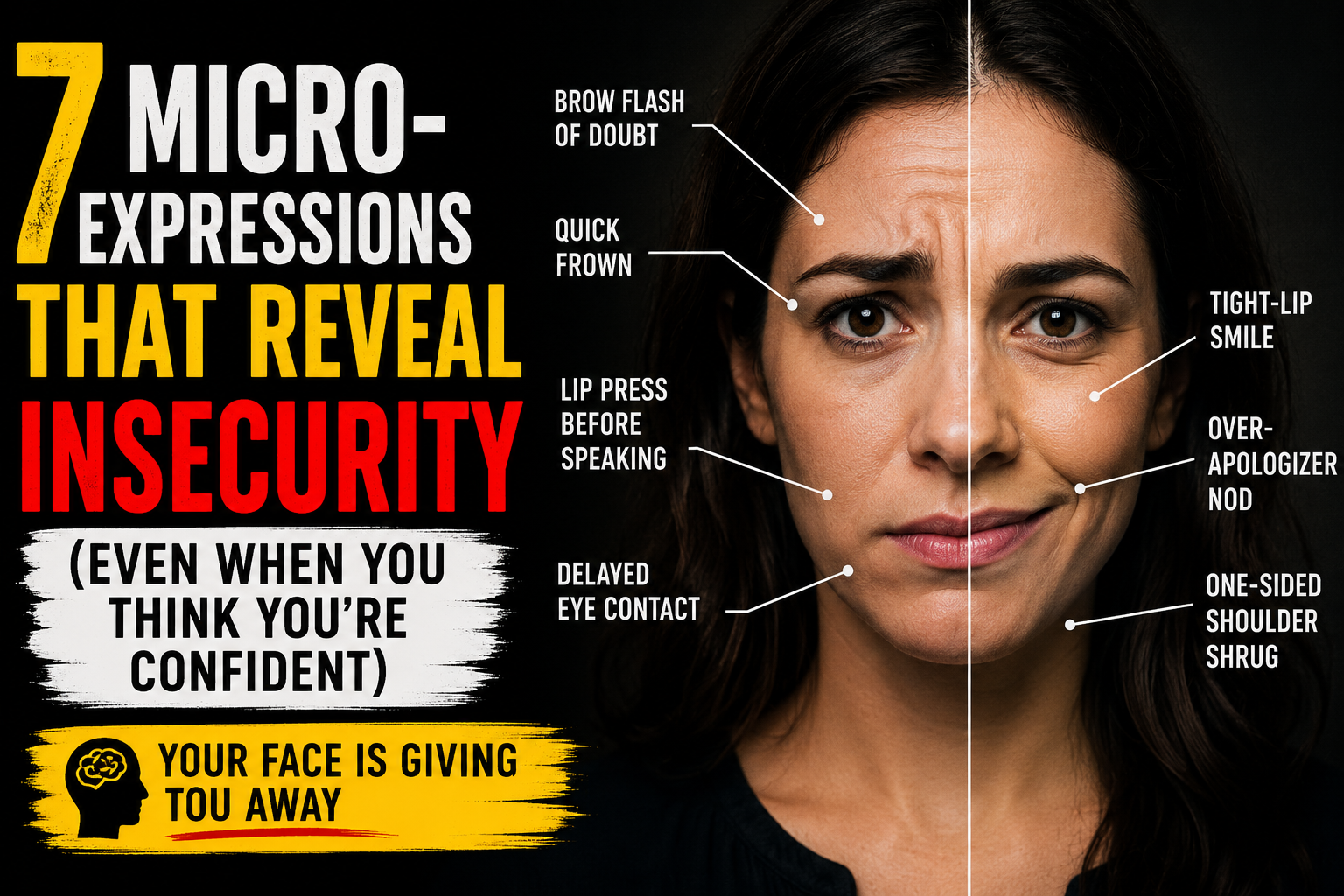
We all know that feeling when we walk away from a meeting, date, interview, or networking event convinced that we handled everything perfectly. The conversation seemed smooth, the words came naturally, and for a few moments, you genuinely felt confident. But then something strange happens. The responses afterward feel colder than expected, people seem less engaged, or the warmth you thought you created never quite appears. You start wondering whether you said the wrong thing. Sometimes, however, the problem is not what you said at all. It may have been what your face and body communicated while you were saying it.
Human beings are constantly reading one another, often without realizing it. Before we consciously analyze someone’s words, we notice their facial expressions, posture, eye contact, gestures, and tone. This is why someone can say, “I’m completely comfortable,” while their clenched jaw, tense smile, or restless movements suggest something very different. We may believe we are successfully hiding insecurity, nervousness, or self-doubt, but our bodies can reveal emotional tension in surprisingly subtle ways.
This is where micro-expressions and other fleeting nonverbal signals become fascinating. A brief change around the eyes, a compressed mouth, an unusual eyebrow movement, or a moment of hesitation can communicate uncertainty before we have even finished our sentence. These signals should not be treated as perfect mind-reading tools, because individual expressions can have many explanations. But when several cues appear together, they can provide clues about how someone may be feeling in a particular moment.
The uncomfortable truth is that confidence is not communicated only through what you say. Sometimes, your face speaks first.
Table of Contents
- 1 1. The Eyebrow Flash That Lasts Too Long
- 2 2. The Tight-Lip Smile
- 3 3. The Over-Apologizing Nod
- 4 4. The Blink-and-Gone Frown
- 5 5. The One-Sided Shoulder Shrug
- 6 6. The Lip Press Before Speaking
- 7 7. Delayed Eye Contact
- 8 Why Your Nervous System Can Reveal What Your Words Hide
- 9 How to Become More Naturally Confident
- 10 Try This Simple Self-Awareness Exercise
- 11 Final Thoughts
1. The Eyebrow Flash That Lasts Too Long
Eyebrows are remarkably expressive. They rise when we are surprised, skeptical, uncertain, impressed, or emotionally activated. A quick eyebrow movement is completely normal, but when the movement becomes exaggerated or repeatedly appears during ordinary interactions, it can sometimes communicate more tension than confidence.
Imagine walking into a room and immediately raising your eyebrows while looking around, almost as though you are checking whether people approve of your presence. You may not consciously notice the gesture, but another person can interpret the combination of facial movement, posture, and gaze as uncertainty.
The important point is not that raised eyebrows automatically mean insecurity. They don’t. Context matters enormously. The same expression can communicate genuine surprise, curiosity, enthusiasm, or skepticism. The clue becomes more interesting when it repeatedly appears alongside other signs of nervousness, such as excessive smiling, rapid nodding, or hesitant speech.
Confidence tends to require less monitoring of other people’s reactions. When you feel secure, you don’t have to constantly check the room to determine whether you are being accepted.
2. The Tight-Lip Smile
A smile usually signals warmth, friendliness, and positive emotion, but not every smile communicates the same thing. A smile that feels relaxed and natural is very different from one in which the lips are tightly pressed together while the rest of the face remains tense.
The tight-lip smile can sometimes appear when someone is uncomfortable, holding something back, or trying to maintain social composure. You may recognize it in yourself when someone says something unexpected and you instinctively smile even though you don’t actually feel relaxed.
This is especially common when people are trying very hard to appear agreeable. They want the conversation to go well, so they smile, nod, and reassure the other person even when they feel uncertain inside.
The irony is that trying too hard to look comfortable can sometimes make you look less comfortable. Genuine confidence does not require constant facial approval. It allows moments of neutrality, silence, disagreement, and natural emotional expression.
3. The Over-Apologizing Nod
Nodding is one of the most useful signals in conversation. It tells another person that you are listening, following their point, or encouraging them to continue. But when nodding becomes unusually fast or excessive, the meaning can change.
Some people nod repeatedly because they are afraid of appearing difficult, disagreeable, or uninterested. Instead of simply listening, they begin communicating something closer to, “Yes, I understand. Please keep approving of me.”
This can become particularly noticeable in professional situations. Imagine someone presenting a strong argument but repeatedly nodding while their manager speaks, even before the manager has finished making a point. The words may sound confident, but the behavior can suggest that the person is overly concerned with gaining approval.
Real confidence doesn’t require constant agreement. A confident listener can remain still, absorb information, and take a moment before responding. You don’t need to physically reassure someone every few seconds to prove that you are engaged.
4. The Blink-and-Gone Frown
Sometimes insecurity doesn’t appear as a dramatic expression. It appears for a fraction of a second.
A tiny tightening around the forehead, a brief downward movement at the corners of the mouth, or a momentary narrowing of the eyes can reveal confusion, disagreement, discomfort, or doubt. These expressions can disappear almost immediately, which is why people often fail to notice that they happened.
This is one reason facial expressions are so difficult to interpret accurately. A fleeting frown does not automatically mean jealousy or insecurity. It could simply mean that someone is processing information or trying to understand what was just said.
The more useful lesson is to become aware of your own emotional leakage. If you notice that your face repeatedly reacts negatively before you have consciously decided how you feel, it may be worth asking yourself what emotion is appearing underneath the reaction.
Sometimes the face reacts before the conscious mind has finished forming an answer.
5. The One-Sided Shoulder Shrug
A shoulder shrug is often associated with uncertainty, indifference, or lack of commitment. When both shoulders rise naturally, the gesture may simply communicate “I don’t know.” But a partial or one-sided shrug can sometimes create a subtle mismatch between what someone says and what their body communicates.
Imagine saying, “I’m completely certain this is the right decision,” while one shoulder briefly rises. The words communicate confidence, but the body introduces a tiny note of hesitation.
Again, this is not a lie detector. Body language cannot reliably tell you what someone is thinking from one isolated movement. People move differently because of habits, posture, physical discomfort, cultural differences, and personality.
But when your words repeatedly communicate certainty while your body repeatedly communicates hesitation, other people may sense the contradiction even if they cannot explain exactly what they noticed.
Sometimes confidence isn’t about controlling every gesture. It is about becoming comfortable enough with your position that your body no longer needs to contradict your words.
6. The Lip Press Before Speaking
Have you ever been asked a question and noticed yourself pressing your lips together before answering?
That tiny moment can happen when we are deciding what to say, suppressing an emotional reaction, or trying to formulate the “right” response. In social situations, it may appear when someone is afraid of saying something that could be judged negatively.
The problem isn’t the lip press itself. Everyone does it. The interesting part is what happens around it.
If you regularly press your lips together, hesitate, look away, and then carefully deliver an answer, you may be communicating that you are monitoring yourself heavily. You aren’t simply speaking; you are evaluating every word before allowing it out.
This often happens to people who desperately want to make a good impression. They become so focused on avoiding mistakes that their natural communication disappears beneath layers of self-monitoring.
Confidence doesn’t mean saying everything that comes into your head. It means being able to pause and choose your words without feeling that every sentence is a test of your worth.
7. Delayed Eye Contact
Eye contact is one of the most powerful elements of nonverbal communication, but it is also one of the most misunderstood. Avoiding eye contact does not automatically mean someone is dishonest, insecure, or hiding something. People may look away because they are thinking, shy, culturally conditioned, distracted, or simply uncomfortable with prolonged eye contact.
However, unusually delayed eye contact can sometimes communicate hesitation. If someone speaks to you and you consistently wait a moment before looking at them, the delay may be interpreted as uncertainty or discomfort.
The opposite can also become a problem. Trying too hard to maintain unbroken eye contact can feel aggressive or unnatural. Confidence isn’t about staring someone down. It is about being comfortable enough to let eye contact happen naturally, break naturally, and return naturally.
The goal is not to perform confidence. It is to become comfortable enough that your behavior doesn’t need to prove anything.
Why Your Nervous System Can Reveal What Your Words Hide
The deeper lesson behind these behaviors is that insecurity isn’t simply a facial problem. It is often connected to the body’s response to social pressure.
When we feel judged, rejected, threatened, or uncertain, our nervous system can become activated. Our muscles tense. Our breathing changes. Our attention narrows. We become more aware of ourselves and more concerned about how others perceive us.
That can create a cycle. You become nervous, notice your nervousness, worry that other people will notice it, and then become even more nervous.
This is why forcing yourself to “look confident” doesn’t always work. If your internal state remains highly activated, trying to control every facial expression can actually make you more self-conscious.
A better approach is to reduce the pressure to perform.
Relax your shoulders. Unclench your jaw. Slow your breathing. Allow yourself to pause before answering. Instead of constantly asking, “How am I coming across?” shift your attention toward the person and the conversation itself.
The less you monitor yourself, the more naturally you tend to communicate.
How to Become More Naturally Confident
You don’t need to memorize every possible micro-expression or constantly analyze your face in the mirror. In fact, becoming obsessed with controlling every movement can make social anxiety worse.
Instead, focus on a few basic habits.
Before entering an important conversation, take a few slow breaths and allow your body to settle. During the conversation, listen rather than rehearsing your next response. Don’t force smiles, eye contact, or gestures. Let them happen naturally. When you disagree, allow yourself to disagree without immediately apologizing or trying to soften every statement.
Most importantly, stop treating every social interaction as a performance.
You don’t need everyone to like you. You don’t need every sentence to be perfect. You don’t need to appear completely fearless.
Confidence often becomes visible when you stop trying so hard to demonstrate it.
Try This Simple Self-Awareness Exercise
At your next meeting, social event, or important conversation, ask someone you trust to observe you for a few minutes. Don’t ask them to judge whether you were impressive or successful. Ask them to focus only on your nonverbal behavior.
Afterward, ask two simple questions: “Did I appear comfortable with myself?” and “What did my face or body do when I became uncertain?”
The answers may surprise you.
You might discover that you smile when nervous, nod excessively when you want approval, look away when challenged, or tense your mouth when you’re trying to formulate the perfect response. None of these behaviors mean something is wrong with you. They simply give you information about how your body responds to social pressure.
And awareness is useful because you cannot change a pattern you never notice.
Final Thoughts
Insecurity rarely announces itself loudly. More often, it appears in tiny moments: a tense smile, a nervous nod, a brief frown, a shoulder movement, a delayed glance, or a split-second hesitation before speaking. These signals don’t provide a magical way to read someone’s mind, and no single expression can prove that a person is insecure. Human behavior is far too complicated for that.
But your own nonverbal behavior can offer valuable clues about what is happening inside you.
The goal isn’t to eliminate every nervous gesture or become obsessed with appearing confident. The goal is to become comfortable enough with yourself that you don’t constantly need to manage how others perceive you.
Real confidence is not a perfect smile, unwavering eye contact, or carefully controlled body language. It is the ability to remain present even when you feel uncertain, speak without constantly seeking approval, and accept that you don’t have to perform perfection to deserve respect.
Your face may reveal what you feel. But you can learn to understand what it is telling you, and that awareness may be the first step toward becoming genuinely comfortable in your own skin.