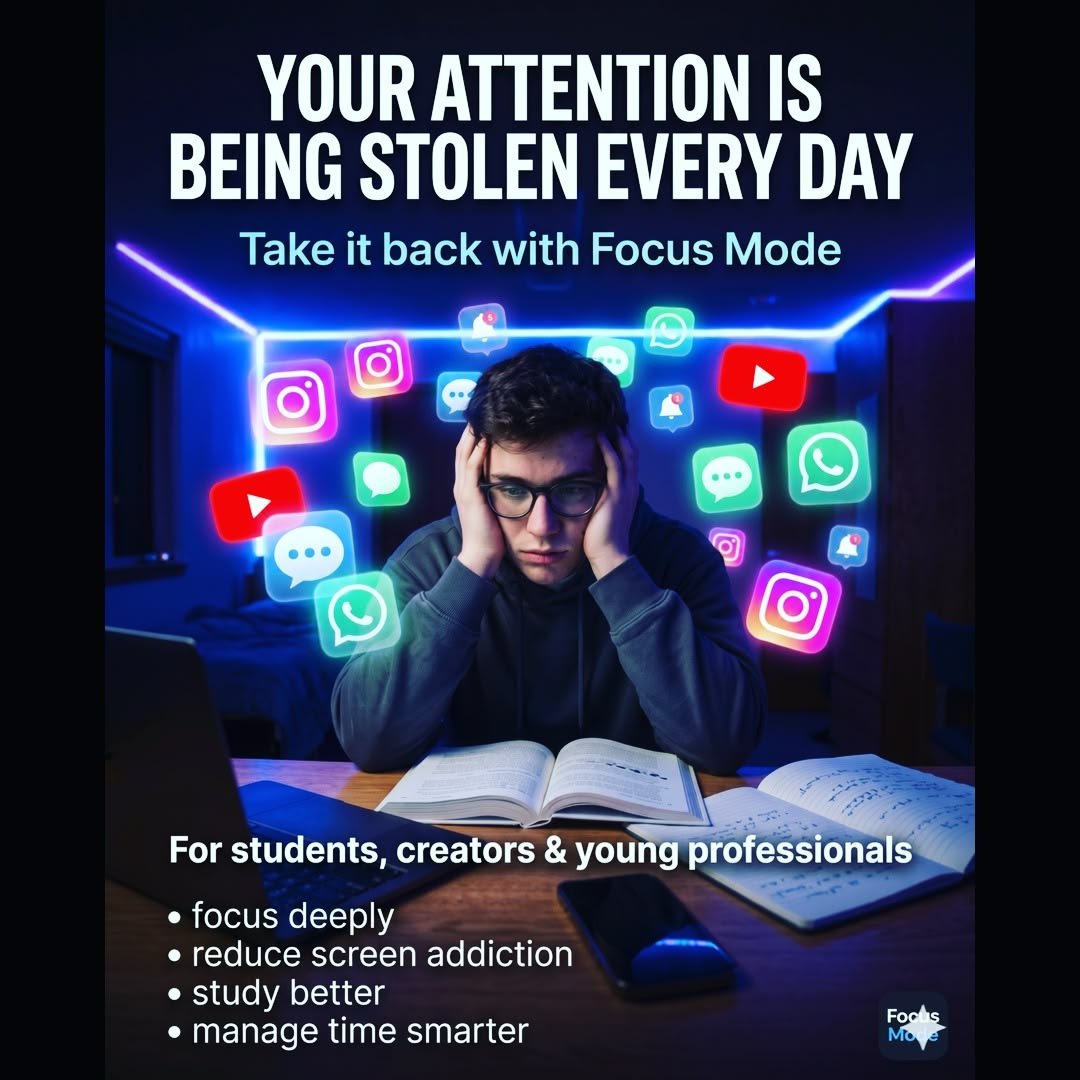
There is nothing dramatic about losing your attention. It usually happens quietly, one notification at a time.
You pick up your phone to check the weather, answer one message, or look at something for a few seconds. Then you see another notification. One post becomes three, three becomes ten, and before you realize it, half an hour has disappeared.
The unsettling part is that it rarely feels like a conscious decision. You did not decide to waste your evening scrolling. You simply followed one small impulse after another.
That is what makes endless scrolling so powerful. It does not demand your attention all at once. It takes it in tiny pieces.
Table of Contents
Why We Keep Reaching for Our Phones
Our phones provide something the human brain naturally finds difficult to resist: constant novelty.
A notification might bring a message. A social media feed might reveal something funny. The next swipe might show an interesting story, a shocking headline, or something completely unexpected.
That uncertainty keeps us checking.
The problem becomes even stronger when scrolling is combined with stress, boredom, loneliness, or mental fatigue. When real life feels demanding, the phone offers an immediate escape. You do not have to solve anything. You simply swipe.
Over time, this can turn checking your phone into an automatic behavior rather than a deliberate choice.
You may reach for it while waiting for an elevator, sitting in traffic, eating dinner, watching television, or even having a conversation with someone you care about.
The habit becomes so familiar that you sometimes unlock your phone before you even know why.
The Hidden Cost of Endless Scrolling
A few minutes of scrolling may not seem harmful. The problem is repetition.
Imagine checking your phone dozens of times throughout the day. Each interruption may appear insignificant, but together they can fragment your attention and make it harder to stay deeply engaged with anything.
Attention Residue Can Follow You
When you move rapidly from a conversation to a notification, then from a notification to a video and back to your work, part of your attention can remain attached to what you just saw.
You may technically return to the task in front of you, but your mind is still processing something from the screen.
This is one reason uninterrupted periods of concentration can feel increasingly difficult when your day is filled with constant digital interruptions.
Your Mood Can Quietly Shift
Scrolling does not always make you feel better.
One moment you may see something entertaining. The next, you encounter an argument, disturbing news, someone else’s seemingly perfect life, or a stream of negative headlines.
This creates an unpredictable emotional environment.
You can begin scrolling because you are bored and finish feeling anxious, irritated, inadequate, or mentally exhausted.
The phone did not necessarily create the emotion, but the endless stream of information can amplify it.
Your Relationships Can Feel the Difference
Attention is one of the simplest ways we show people that they matter.
When someone is speaking and you repeatedly glance at your phone, you may technically still be listening, but your attention is divided.
Over time, these tiny moments can affect relationships. Conversations become shorter. Eye contact becomes less natural. Silence becomes something we immediately fill with a screen.
The cost is not always obvious in the moment. It becomes visible when you realize that you were physically present but mentally somewhere else.
The Phone Is Not the Enemy
It is easy to blame technology, but the problem is more complicated.
Smartphones can help us communicate, learn, work, navigate unfamiliar places, discover new ideas, and stay connected with people across the world.
The goal is not to eliminate technology.
The goal is to stop allowing technology to automatically decide where your attention goes.
Your attention is one of the most valuable resources you have. Once a minute passes, you cannot recover it.
That makes attention worth protecting.
How to Reclaim Your Attention
You do not need to delete every social media app or disappear from the internet. Small changes can create enough friction to interrupt automatic habits.
Create Distance Between You and Your Phone
Try charging your phone outside the bedroom instead of keeping it beside your bed.
You can also leave it in another room while working, reading, eating, or spending time with family.
The extra physical distance creates a moment in which you have to consciously decide whether you really need it.
That small pause can be surprisingly powerful.
Turn Off Unnecessary Notifications
Not every app deserves immediate access to your attention.
Turn off notifications that are not genuinely important. Your phone does not need to announce every new post, promotion, reaction, or update.
When fewer things demand your attention, you have more control over where that attention goes.
Replace Automatic Scrolling
The easiest way to break a habit is often to replace it with something else.
Keep a book nearby. Take a short walk. Make coffee without your phone. Write down an idea. Talk to someone. Sit outside for a few minutes.
The goal is not to fill every empty moment with productivity.
Sometimes the most valuable replacement for scrolling is simply allowing yourself to experience boredom.
Choose What You Consume
Not everything on your screen has the same effect on your mind.
Some content leaves you informed, inspired, or curious. Other content leaves you angry, anxious, distracted, or exhausted.
Pay attention to how you feel after using an app.
Ask yourself: Do I feel better, worse, or exactly the same after twenty minutes here?
You may discover that the problem is not simply screen time. It is the type of information you repeatedly consume.
Your Attention Shapes Your Life
Your life is built from moments, and your attention determines which moments you actually experience.
If your attention is constantly pulled toward notifications, trending topics, arguments, advertisements, and endless feeds, you may gradually become less present for the things that cannot compete for your attention.
A child telling you a story.
A conversation with someone you love.
A book you have been meaning to finish.
An idea that could become something important.
A quiet evening when nothing particularly exciting happens.
These moments do not flash across your screen asking you to stay.
You have to choose them.
The Real Goal Is Not Less Technology. It Is More Choice.
Reclaiming your attention does not mean becoming anti-technology. It means becoming intentional about where your mind goes.
You do not have to win every battle against your phone. You simply need to create enough space to notice when the habit is controlling you.
The next time you reach for your phone without knowing why, pause for a moment.
Ask yourself: What am I actually looking for?
Maybe it is information. Maybe it is connection. Maybe it is entertainment. Or maybe you are simply uncomfortable with being alone with your thoughts for thirty seconds.
Whatever the answer is, knowing it gives you something scrolling cannot: a choice.
Your attention is your life in miniature. Protecting it is not about becoming more productive every second.
It is about making sure that when your life is happening, you are actually there to experience it.
Frequently Asked Questions
1. Why is endless scrolling so addictive?
Endless scrolling combines novelty, unpredictable rewards, and easy access to stimulating information. Each swipe creates the possibility of finding something interesting, which encourages people to continue scrolling.
2. Does social media reduce attention span?
Frequent interruptions and rapid switching between different types of content can make sustained concentration more difficult. Creating periods of uninterrupted focus can help rebuild better attention habits.
3. How can I stop scrolling at night?
Start by charging your phone outside the bedroom, turning off nonessential notifications, and creating a screen-free period before sleep. Replacing scrolling with reading, stretching, or quiet music can also make the transition easier.
4. How much screen time is too much?
There is no single number that applies equally to everyone. A more useful question is whether screen use interferes with sleep, work, relationships, physical activity, or your ability to concentrate.
5. Why do I automatically check my phone?
Repeated checking can become a habit triggered by boredom, stress, notifications, or environmental cues. Once the behavior becomes automatic, you may reach for your phone without consciously deciding to do so.
6. How can I improve my attention span?
Reduce unnecessary interruptions, create phone-free periods, focus on one task at a time, read longer-form material, and practice spending short periods without digital stimulation.
7. Is taking a break from social media helpful?
A temporary break can help you recognize how automatic your habits have become. Even shorter daily periods without social media can create more space for focused work, relationships, and offline activities.
Final Takeaway
The biggest danger of endless scrolling is not that you will lose one evening.
It is that you may slowly become comfortable giving away hundreds of small pieces of your attention without realizing what they are worth.
Your phone will always have another notification. Another video. Another headline. Another reason to keep scrolling.
Your life does not.
Image Alt Text: Person putting down a smartphone to reclaim attention and focus on real life
Image Caption: Reclaiming your attention begins when you stop letting endless scrolling decide where your mind goes.
Image Description: A modern psychological illustration showing a person stepping away from a glowing smartphone and reconnecting with the real world, representing digital distraction, attention, mindfulness, and healthier technology habits.