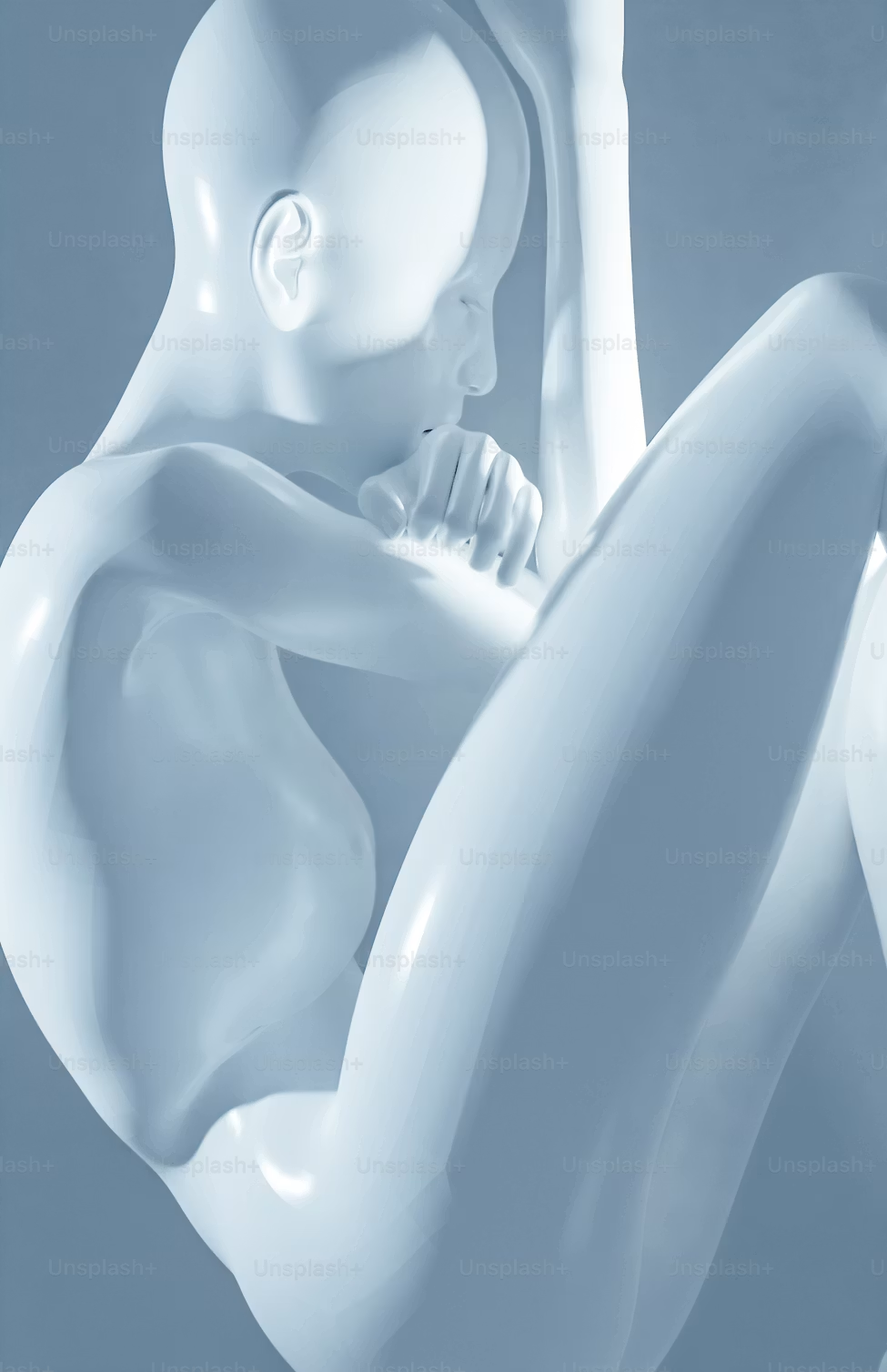
Every human life begins with a moment that is both ordinary and extraordinary.
Every culture celebrates birth as a miracle, yet history reminds us that it has also been one of humanity’s greatest risks. Behind every newborn’s first breath lies a story of endurance, biology, sacrifice, and love. For thousands of years, bringing a child into the world was one of the most dangerous experiences a woman could face. Families celebrated new life while quietly fearing the possibility of devastating loss.
Today, advances in medicine have transformed childbirth in remarkable ways. Millions of mothers and babies survive because of skilled healthcare professionals, safer surgical procedures, antibiotics, blood transfusions, and improved prenatal care. Yet despite these extraordinary achievements, childbirth remains one of the most physically and emotionally demanding experiences the human body can endure.
The story of birth is not simply a medical story. It is also a psychological, evolutionary, and deeply human one. It reveals the remarkable balance between biology and compassion, reminding us that while evolution shaped our bodies, humanity learned how to protect them.
Table of Contents
- 1 Birth Was Once One of Life’s Greatest Risks
- 2 Why Human Childbirth Is So Difficult
- 3 The Paradox of Modern Medicine and Human Evolution
- 4 Childbirth Is More Than a Physical Experience
- 5 The Invisible Mental Load Mothers Carry
- 6 Why Support Matters More Than Ever
- 7 The Greatest Evolution Is Compassion
- 8 Final Thoughts
Birth Was Once One of Life’s Greatest Risks
For much of human history, childbirth carried enormous uncertainty. Before modern medicine, infections, severe bleeding, obstructed labor, and complications during delivery claimed the lives of countless mothers and infants.
Historical records suggest that maternal mortality was dramatically higher than it is today. In many communities, pregnancy was accompanied by hope and celebration, but also by quiet fear. Families understood that childbirth could bring unimaginable joy or heartbreaking tragedy within the same day.
The remarkable decline in maternal deaths over the last two centuries represents one of medicine’s greatest successes. Improved sanitation, antibiotics, safer Cesarean deliveries, modern anesthesia, prenatal monitoring, and emergency obstetric care have saved millions of lives across the world.
This progress reminds us that compassion, scientific discovery, and collective care have become just as important to human survival as biology itself.
Why Human Childbirth Is So Difficult
Unlike most mammals, humans give birth to babies with exceptionally large brains. This extraordinary brain development allows us to learn language, solve complex problems, and build civilizations.
However, our intelligence comes with an evolutionary trade-off.
As humans evolved to walk upright, the structure of the pelvis changed to support efficient movement. At the same time, the human brain continued growing larger. These two evolutionary pressures created what scientists often describe as the “obstetric dilemma”—the challenge of delivering a baby with a relatively large head through a comparatively narrow birth canal.
Although researchers continue to debate exactly how this evolutionary balance developed, one fact remains clear: human childbirth is significantly more complex than that of many other mammals.
This is why labor often lasts many hours, requires assistance, and sometimes needs medical intervention to ensure the safety of both mother and child.