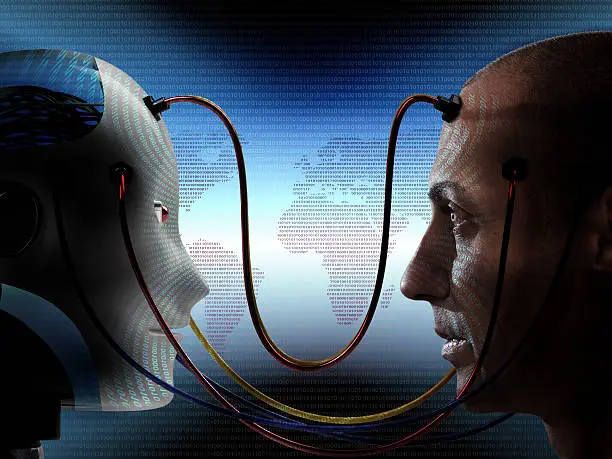
magine waking up one morning and finding a message from someone who seems to know exactly what to say. They remember your favorite song, ask about something you mentioned weeks ago, respond almost instantly, and somehow always seem available when you need someone to talk to. They tell you that they have never connected with anyone quite like you. Within a surprisingly short period of time, an online stranger begins to feel less like a stranger and more like someone who has become an important part of your life.
Now imagine that much of the conversation is being generated or assisted by artificial intelligence.
This is one of the unsettling developments transforming modern romance scams. Artificial intelligence can help scammers produce convincing messages, maintain long conversations, translate languages, research potential victims, create fake identities, and sometimes generate or manipulate images and video. The technology does not create the underlying scam, but it can make traditional psychological manipulation faster, cheaper, and more convincing.
The result is a disturbing combination of an old crime and new technology: emotional manipulation powered by increasingly sophisticated digital tools.
Table of Contents
- 1 What Is AI Love-Bombing?
- 2 How an AI-Assisted Romance Scam Can Develop
- 3 Why AI Makes the Manipulation More Dangerous
- 4 Deepfakes Add Another Layer of Deception
- 5 Why Intelligent People Can Still Fall for Romance Scams
- 6 The Psychology Behind the Scam
- 7 Seven Warning Signs of an AI-Assisted Romance Scam
- 8 The Most Important Rule: Never Let Romance Override Verification
- 9 Take a Step Back When Your Emotions Become Overwhelming
- 10 What to Do If You Already Sent Money
- 11 The Future of Online Romance Requires More Skepticism
- 12 Final Thoughts
What Is AI Love-Bombing?
Love-bombing generally refers to overwhelming another person with affection, attention, compliments, promises, or emotional intensity, particularly in a way that creates attachment very quickly. In a legitimate relationship, intense early affection is not automatically evidence of manipulation. The concern arises when excessive affection is deliberately used to create trust and emotional dependence before the person makes requests or begins exploiting the relationship.
AI can make this process easier for scammers.
Instead of sending generic messages to dozens of people, a scammer can use technology to help personalize conversations. Information publicly available on social media can provide clues about someone’s interests, hobbies, family, profession, travel, or lifestyle. A scammer can then use those details to make communication appear unusually personal.
The victim may think, “They really understand me.”
In reality, the person on the other side may simply be collecting information and using it strategically.
How an AI-Assisted Romance Scam Can Develop
The first stage often looks completely harmless. Someone sends a friendly message, matches with you on a dating platform, or contacts you through social media. The conversation gradually becomes more personal, and the person appears unusually interested in your life.
Then the emotional intensity increases.
Messages become more frequent. Compliments become more personal. The person starts talking about the future and describing the connection as something rare. They may claim that they have never experienced such an immediate bond with anyone before.
This stage is psychologically important because emotional attachment can develop before trust has been properly earned.
Eventually, the relationship may shift toward a financial request.
The emergency could involve medical bills, travel problems, a frozen bank account, a business opportunity, cryptocurrency, an investment opportunity, or another supposedly urgent situation. The details vary, but the psychological strategy remains similar: create emotional trust first and introduce the financial request later.
By the time money enters the conversation, the victim may no longer feel as though they are sending money to a stranger. They may feel as though they are helping someone they love.
That is precisely what makes romance scams so effective.
Why AI Makes the Manipulation More Dangerous
Traditional romance scammers have always relied on emotional manipulation. Artificial intelligence simply gives them additional tools.
A scammer can potentially use AI to generate fluent messages, maintain conversations across different languages, respond quickly, imitate particular communication styles, and produce personalized content at a scale that would be difficult for one person to manage manually.
AI can also reduce one of the biggest weaknesses of traditional scams: inconsistency.
A human scammer may forget details, contradict an earlier story, or struggle to maintain several conversations at once. Technology can make it easier to keep track of information and maintain the illusion of a consistent personality.
This does not mean every unusually polished online conversation is suspicious. It means that perfect grammar, rapid replies, emotional availability, or impressive conversational skills should not automatically be treated as proof that someone is genuine.
Deepfakes Add Another Layer of Deception
For years, one of the strongest ways people verified online relationships was through video calls. Seeing someone’s face and hearing their voice provided a stronger sense of authenticity than text alone.
Generative AI has complicated that assumption.
Synthetic images, manipulated videos, voice cloning, and deepfake technology can potentially be used to create convincing digital identities. A person may appear to participate in a video conversation while the identity or appearance being presented is not what it seems.
This does not mean that every unusual video call is a deepfake. It does mean that video should no longer be treated as absolute proof of someone’s identity when large amounts of money or sensitive information are involved.
The more valuable the request, the stronger your verification should be.
Why Intelligent People Can Still Fall for Romance Scams
One of the biggest misconceptions about romance scams is that only careless or technologically inexperienced people become victims.
That simply isn’t a safe assumption.
Manipulation does not depend entirely on intelligence. It often depends on timing, emotion, trust, loneliness, hope, and the psychological commitment that develops during a relationship.
A person can be highly educated and still become vulnerable when they believe they have finally found someone who understands them.
This is because emotional reasoning can operate differently from analytical reasoning. When we feel strongly connected to someone, we naturally want information that confirms the relationship is genuine. Warning signs can become easier to explain away.
“Maybe they’re just busy.”
“Maybe their camera isn’t working.”
“Maybe the bank really did freeze their account.”
“Maybe this investment opportunity really is legitimate.”
One explanation becomes another until the entire story feels easier to believe than the possibility that someone we emotionally trusted has been deceiving us.
The Psychology Behind the Scam
Romance scams exploit several well-known psychological principles.
Reciprocity can make people feel obligated to return affection, attention, or favors. When someone constantly tells you how important you are, you may gradually feel responsible for supporting them.
Commitment and consistency can also play a role. After investing weeks or months in a relationship, people naturally want to believe that their previous decisions were correct.
Intermittent reinforcement can make attention especially addictive. Periods of intense affection followed by uncertainty can create a powerful emotional cycle that keeps someone waiting for the next message.
Social isolation can make manipulation stronger. If a scammer convinces someone that friends or family simply “don’t understand” the relationship, outside perspectives become less influential.
The most dangerous part is that none of these psychological mechanisms require the victim to be unintelligent. They are ordinary features of human psychology that can be exploited under the right circumstances.
Seven Warning Signs of an AI-Assisted Romance Scam
One warning sign alone does not prove that someone is a scammer. Several warning signs appearing together, however, should make you slow down.
1. The relationship becomes intense extremely quickly. Someone you barely know begins talking about soulmates, marriage, lifelong commitment, or an extraordinary connection within a very short period.
2. Their personal story constantly changes. Important details about their job, location, family, travel plans, or background do not remain consistent.
3. They repeatedly avoid independent verification. They have excuses for why they cannot meet, make a spontaneous video call, or provide reasonable proof of who they are.
4. Their communication feels unusually polished or strangely consistent. Perfect responses at every hour of the day are not proof of AI use, but they should not be treated as proof of authenticity either.
5. Money eventually enters the relationship. Requests involving cryptocurrency, wire transfers, gift cards, investment opportunities, emergency payments, or financial “help” should be treated as major warning signs.
6. They discourage you from talking to other people. Anyone who tries to isolate you from friends or family deserves careful scrutiny.
7. They create urgency. Scammers often want decisions made quickly because time gives you less opportunity to investigate their story.
The Most Important Rule: Never Let Romance Override Verification
If someone you met online asks you for money, stop.
Do not allow emotional pressure to determine your financial decisions. Do not send cryptocurrency because someone says the opportunity will disappear tomorrow. Do not transfer money because someone claims their life depends on it. Do not share banking information, passwords, verification codes, or sensitive financial documents because you feel emotionally responsible for someone.
A genuine romantic relationship can survive reasonable questions.
A legitimate person should not be offended because you want to verify their identity.
And a healthy relationship should never require you to sacrifice your financial security to prove your love.
Take a Step Back When Your Emotions Become Overwhelming
One of the simplest defenses against manipulation is surprisingly powerful: slow down.
If you feel an intense emotional connection with someone you have never met in person, give yourself time before making major decisions. Talk to someone you trust. Search for inconsistencies in their story. Use independent methods to verify photographs and identity. Do not rely exclusively on information provided by the person themselves.
Most importantly, pay attention to how you feel when you question them.
A genuine person may be surprised by your caution, but someone attempting to manipulate you may respond with anger, guilt, threats, emotional withdrawal, or increased pressure.
That reaction can tell you something.
What to Do If You Already Sent Money
If you believe you may have been targeted by a romance scam, do not send additional money simply because you are afraid of losing what you already sent.
This is an important psychological trap. Once people have invested money, time, and emotion into something, they may feel compelled to invest even more because they want to recover their previous losses. This is closely related to the sunk-cost effect.
Instead, stop communication if it is safe to do so, preserve relevant messages and transaction records, contact your financial institution or payment provider as soon as possible, and report the suspected fraud through the appropriate platform or authorities.
Do not feel ashamed.
The shame surrounding romance scams often benefits the scammer because embarrassment can prevent victims from seeking help. Being deceived does not mean you are stupid. It means someone deliberately attempted to exploit ordinary human emotions such as trust, affection, hope, and compassion.
The Future of Online Romance Requires More Skepticism
Technology will continue to make digital communication more realistic. Images will become harder to authenticate, voices will become easier to reproduce, and automated systems will become increasingly capable of maintaining convincing conversations.
That does not mean genuine human connection is disappearing.
It means that trust online will need to become more deliberate.
The question is no longer simply, “Does this person sound real?”
A better question is, “What independent evidence do I have that this person is who they claim to be?”
That difference matters.
Final Thoughts
Artificial intelligence did not invent romance scams. Scammers have manipulated people through fake relationships for decades. What AI changes is the scale, speed, personalization, and sophistication with which some of these schemes can potentially operate.
The strongest defense is not paranoia. It is awareness.
Enjoy online conversations, meet new people, and remain open to genuine connection, but do not confuse emotional intensity with proof of authenticity. Someone remembering your favorite song does not prove they love you. Someone sending beautiful messages does not prove they are trustworthy. A photograph does not prove an identity, and even a video call may not provide absolute certainty.
Real love does not demand blind trust.
It can survive questions, boundaries, patience, and verification.
In a world where technology can imitate affection, the most valuable thing you can protect is not just your bank account. It is your ability to pause, think clearly, and remember that genuine trust should be earned through consistent reality, not manufactured through perfect words.