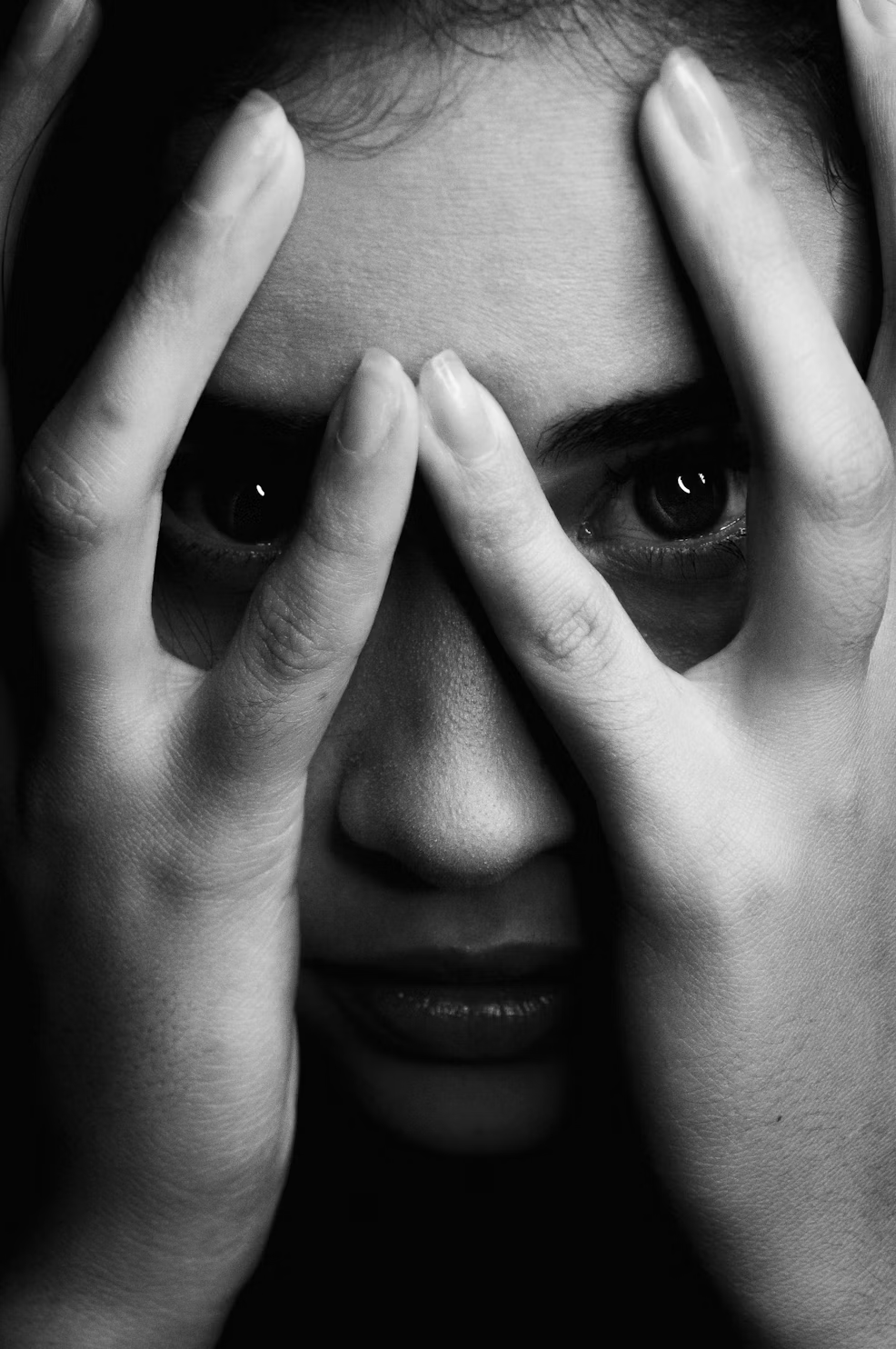
When most people hear the words “dark psychology,” they immediately think of manipulative masterminds, narcissists, sociopaths, or people who intentionally deceive others for personal gain. Movies and social media have taught us to associate dark psychology with villains who exploit emotions without remorse. While these behaviors certainly exist, they represent only a small part of a much larger and more complex psychological reality.
In everyday life, dark psychology often appears in far quieter ways. It hides inside ordinary conversations, strained relationships, silent insecurities, and emotional wounds that people carry for years without fully understanding them. Sometimes it looks like a parent who controls every decision because they’re terrified of losing their child. Sometimes it’s a partner whose jealousy comes from abandonment rather than hatred. Other times it’s a successful professional who smiles confidently in public while privately believing they’re never good enough.
Many of the behaviors we describe as “toxic” are actually coping mechanisms that developed long before we recognized them. They don’t excuse manipulation or emotional abuse, but they help explain why so many people repeat unhealthy patterns despite desperately wanting healthy relationships. Fear, shame, rejection, insecurity, loneliness, and unresolved trauma often become invisible forces guiding human behavior behind the scenes.
Understanding dark psychology isn’t about learning how to manipulate others. It’s about recognizing the hidden emotional patterns that influence people every day—including ourselves. The more we understand these patterns, the more compassion we develop for human behavior while also learning how to protect ourselves from unhealthy dynamics.
Here are eleven powerful psychological truths that reveal how fear, pain, and survival instincts quietly shape the lives of ordinary people.
Table of Contents
- 1 1. Control Often Disguises Itself as Love
- 2 2. People Hide Because Shame Feels Stronger Than Truth
- 3 3. Shame Can Become Louder Than Reality
- 4 4. Hoarding Is Often About Emotional Safety, Not Possessions
- 5 5. The Strongest People Often Carry the Heaviest Emotional Burdens
- 6 6. Helping Can Quietly Become a Way of Controlling Others
- 7 7. Loneliness Sometimes Feels Safer Than Vulnerability
- 8 8. Charm Is Sometimes a Shield, Not a Weapon
- 9 9. Constant Busyness Can Be a Way of Escaping Yourself
- 10 10. Our Environment Often Reflects Our Emotional World
- 11 11. Dark Psychology Is Ultimately About Human Survival
- 12 Final Thoughts
- 13 Frequently Asked Questions
1. Control Often Disguises Itself as Love
One of the most misunderstood aspects of dark psychology is control. Few controlling people wake up intending to dominate someone else’s life. More often, control begins with fear. Fear of abandonment. Fear of failure. Fear of losing someone they deeply care about.
A parent constantly checking their adult child’s location may believe they’re simply being protective. A romantic partner who wants to know every detail of your day may insist it’s because they care deeply. A manager who refuses to delegate work may genuinely believe nobody else can do the job correctly.
Although these behaviors often begin with good intentions, they slowly become restrictive. Instead of creating safety, they create dependence. Instead of building trust, they replace it with surveillance. Healthy love creates freedom. Fear-based love creates control.
One of the hardest psychological lessons is realizing that protecting someone isn’t the same as possessing them. Love grows through trust, while control grows through anxiety.
2. People Hide Because Shame Feels Stronger Than Truth
Every person carries parts of themselves they struggle to reveal. Sometimes it’s a painful childhood memory. Sometimes it’s debt, addiction, trauma, anxiety, or failure. While many assume people keep secrets because they’re dishonest, psychology suggests something much deeper.
Most secrets exist because of shame.
Shame convinces people that if others truly knew them, they would be rejected, abandoned, or judged. Instead of risking that possibility, they hide parts of themselves behind carefully constructed identities. They smile while hurting. They joke while grieving. They appear confident while secretly believing they’re inadequate.
Ironically, the very secrecy intended to protect them often creates greater loneliness. Genuine intimacy can only exist where honesty is allowed to breathe. Every hidden truth creates another emotional wall between ourselves and the people who genuinely care about us.
3. Shame Can Become Louder Than Reality
One of the cruelest psychological experiences is discovering that external reassurance doesn’t always silence internal shame.
A person may receive praise at work, love from family, and admiration from friends, yet still believe they’re not enough. Their achievements feel temporary. Their compliments feel undeserved. Every success is explained away as luck, while every mistake becomes proof of personal failure.
Psychologists recognize this pattern in conditions such as imposter syndrome, chronic low self-esteem, and unresolved childhood criticism. Over time, shame becomes an internal voice that no longer requires other people to exist. The mind simply repeats old emotional messages automatically.
This explains why some of the most accomplished people in the world still struggle with feelings of worthlessness despite overwhelming evidence of their success.
4. Hoarding Is Often About Emotional Safety, Not Possessions
When people think about hoarding, they usually imagine cluttered homes filled with unnecessary belongings. But psychology tells a much deeper story.
For many individuals, possessions become emotional anchors connected to memories, identity, security, or unresolved grief. Throwing away an object doesn’t simply mean removing an item—it can feel like losing a relationship, abandoning a memory, or letting go of a piece of oneself.
Someone may keep old clothes because they represent happier years. Another person may save broken items because discarding them feels emotionally painful. What appears irrational from the outside often makes perfect emotional sense to the person experiencing it.
Treating hoarding purely as a cleaning problem ignores the emotional wounds beneath it. Healing usually begins not by removing possessions, but by addressing the fear that those possessions have been protecting.
5. The Strongest People Often Carry the Heaviest Emotional Burdens
Some of the people who appear happiest are quietly fighting battles no one else can see. They are dependable at work, supportive of their friends, and always ready with a smile or a joke. They seem calm under pressure and capable of handling anything life throws at them. Because they appear so resilient, people rarely stop to ask how they’re actually doing.
Psychology refers to this as high-functioning emotional distress. Instead of expressing pain openly, these individuals cope by becoming more productive, more responsible, and more available to everyone around them. Their competence becomes a mask that hides exhaustion, anxiety, loneliness, or depression.
Unfortunately, the stronger someone appears, the less support they often receive. Others assume they don’t need help because they never complain. Over time, carrying emotional burdens alone can become overwhelming. Strength is admirable, but true emotional health also requires vulnerability and the courage to let others see when you’re struggling.
6. Helping Can Quietly Become a Way of Controlling Others
Helping someone is usually viewed as an act of kindness. However, psychology reminds us that even good intentions can become unhealthy when they remove another person’s independence.
Sometimes parents solve every problem for their children without allowing them to learn from mistakes. Partners constantly make decisions “for your own good.” Friends insist on fixing every difficulty instead of simply listening. While these actions may appear caring, they can slowly communicate a harmful message: “I don’t believe you can handle life without me.”
Over time, the person receiving constant help may begin doubting their own abilities, relying increasingly on someone else’s guidance rather than developing confidence in themselves.
Healthy support empowers people. Controlling support creates dependence. The difference lies in whether our help encourages growth or quietly limits another person’s freedom.
7. Loneliness Sometimes Feels Safer Than Vulnerability
Human beings are naturally wired for connection, yet many people willingly isolate themselves despite desperately wanting close relationships. This contradiction often confuses friends and family members, but psychology offers an important explanation.
For someone who has experienced betrayal, rejection, abandonment, or emotional abuse, vulnerability can feel more dangerous than loneliness. Every new relationship carries the possibility of being hurt again. Rather than risk experiencing that pain, many people convince themselves that staying alone is safer.
Isolation becomes a form of self-protection. It reduces immediate emotional risk but often creates deeper long-term suffering. The walls built to keep pain out eventually keep love out as well.
Healing begins when people gradually discover that not every relationship will repeat the wounds of the past. Trust grows slowly, but it can grow again.
8. Charm Is Sometimes a Shield, Not a Weapon
Charismatic people are often viewed with suspicion because charm is frequently associated with manipulation. While some individuals certainly use charm to control others, psychology suggests another possibility that is far more common.
Many charming people learned early in life that being likable kept them emotionally safe. They discovered that making others laugh, agreeing with everyone, or constantly appearing cheerful reduced criticism and increased acceptance. Over time, pleasing others became an automatic survival strategy.
The problem is that constant charm can become emotionally exhausting. People begin loving the personality someone performs rather than the person they truly are. Eventually, the individual may wonder whether anyone would still care if they stopped entertaining, smiling, or always saying the right thing.
Authentic relationships require more than being liked. They require feeling safe enough to be genuine.
9. Constant Busyness Can Be a Way of Escaping Yourself
Modern society celebrates productivity. Working long hours, staying constantly busy, and filling every moment with activity are often seen as signs of ambition and success. But psychology reminds us that endless busyness isn’t always about achievement.
For many people, staying busy is a way to avoid difficult emotions. Silence leaves room for grief, anxiety, regret, loneliness, or painful memories to surface. By constantly working, planning, cleaning, exercising, or checking notifications, people keep themselves distracted from emotions they don’t yet know how to process.
Eventually, exhaustion replaces fulfillment. The calendar becomes full, but the emotional life remains empty.
Sometimes the hardest thing a person can do isn’t working harder—it’s sitting quietly long enough to hear what their own mind has been trying to say.
10. Our Environment Often Reflects Our Emotional World
Psychologists have long recognized that our physical surroundings frequently mirror our internal emotional state. While no single room can diagnose mental health, our environments often tell stories we struggle to express with words.
A cluttered home may reflect emotional overwhelm or unresolved grief. Extreme perfection may signal anxiety or a need to maintain control. Rooms left untouched for years can symbolize memories someone isn’t ready to revisit.
Our living spaces become extensions of our psychological lives. They reveal habits, fears, priorities, and emotional struggles that even we may not consciously recognize.
This doesn’t mean every untidy room indicates emotional distress or every organized home reflects perfect mental health. Rather, it reminds us that our surroundings and our emotional well-being are deeply connected.
11. Dark Psychology Is Ultimately About Human Survival
Perhaps the most important truth about dark psychology is that it isn’t simply the study of manipulation or cruelty. At its core, it is the study of how fear, insecurity, shame, trauma, and survival instincts influence ordinary human behavior.
The controlling parent often fears abandonment.
The jealous partner fears being replaced.
The perfectionist fears failure.
The people-pleaser fears rejection.
The workaholic fears stillness.
The emotionally distant person fears intimacy.
None of these patterns automatically justify harmful behavior, but understanding their psychological roots helps us respond with greater wisdom instead of immediate judgment.
Final Thoughts
Dark psychology is not simply about identifying toxic people or learning manipulation tactics. It’s about recognizing the hidden emotional forces that quietly shape everyday human behavior. Behind many controlling actions lies fear. Behind perfectionism often lives insecurity. Behind emotional distance frequently hides vulnerability.
The more we understand these patterns, the better equipped we become to build healthier relationships, establish stronger boundaries, and respond to others with both compassion and discernment. Most importantly, we begin recognizing these same tendencies within ourselves.
Real emotional growth doesn’t happen when we pretend darkness doesn’t exist. It happens when we understand it, face it honestly, and choose healthier ways to respond.
Awareness is where healing begins.
Frequently Asked Questions
What is dark psychology?
Dark psychology refers to the study of psychological behaviors involving manipulation, emotional influence, control, deception, and the hidden emotional patterns that shape human behavior.
Is dark psychology always harmful?
Not necessarily. Understanding dark psychology can help people recognize unhealthy behaviors, improve self-awareness, strengthen boundaries, and avoid manipulation.
Why do people become controlling?
Control is often rooted in fear, insecurity, anxiety, or past experiences of loss rather than intentional cruelty.
Can childhood experiences influence dark psychological behaviors?
Yes. Early experiences with attachment, trauma, rejection, and emotional neglect often shape adult relationship patterns and coping mechanisms.
How can I protect myself from psychological manipulation?
Develop self-awareness, establish healthy boundaries, trust consistent actions over words, and learn to recognize common manipulation techniques such as guilt, gaslighting, and emotional control.